

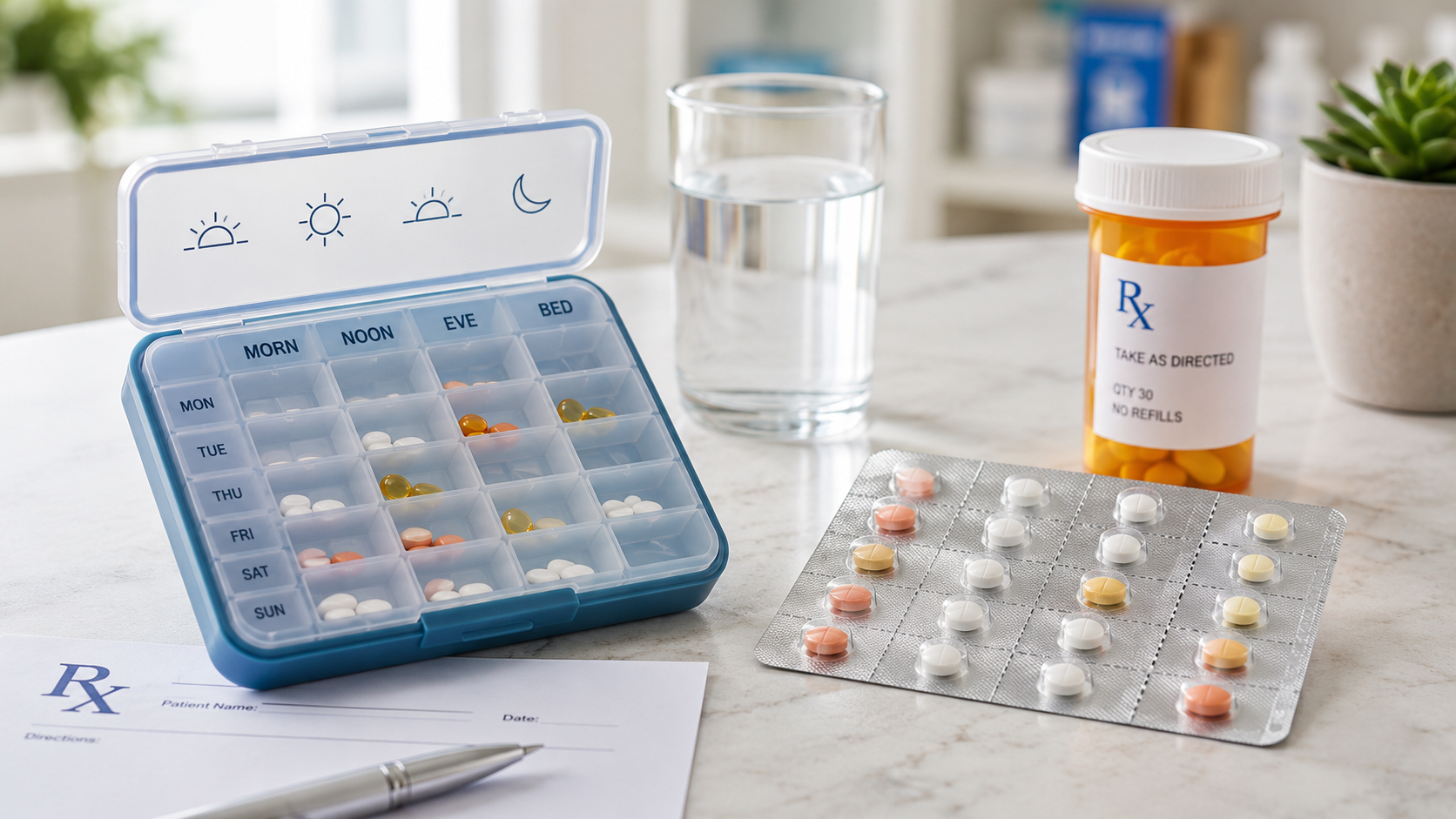
Blister pack vs dosette box: the practical difference
For this blister pack vs dosette box comparison, a dosette box means a reusable plastic organiser that is filled manually. A blister pack means a pharmacy-prepared monitored dosage system with sealed, labelled compartments arranged by day and time. The crucial difference is not simply whether the container is plastic or foil. It is who assesses, prepares, labels and checks the medicines, and whether the system remains suitable when prescriptions change.
What is a dosette box?
A dosette box is usually a reusable organiser with separate compartments for days of the week and times such as morning, lunchtime, evening and bedtime. The person, a relative or another permitted helper opens the original medicine packs and places the tablets or capsules into the relevant sections. Some organisers include alarms or removable daily trays.
In a blister pack vs dosette box decision, a self-filled dosette box can be inexpensive and flexible, but its safety depends on accurate filling, correct storage and a reliable way to check changes. Once a tablet is separated from its labelled original pack, it can be harder to identify, confirm instructions or trace a batch. A mistake made while filling the organiser can affect several later doses.
What is a pharmacy-prepared blister pack?
In this article, a pharmacy-prepared blister pack means a monitored dosage system or multi-compartment compliance aid. Suitable tablets or capsules are dispensed into sealed compartments showing when the dose is intended to be taken. The pack should be labelled, and people receiving medicines support should continue to have access to current patient information leaflets and any medicines supplied separately.
For a blister pack vs dosette box comparison, a pharmacy-prepared pack does not contain every medicine automatically. Inhalers, liquids, creams, eye drops, patches, “when required” medicines and products needing special storage are commonly supplied outside the pack. A pharmacist also needs to consider stability, the timing instructions and whether a fixed schedule is appropriate for the person.
Are dosette boxes and blister packs the same thing?
Sometimes the words are used interchangeably. NHS and pharmacy information may refer to a pharmacy-prepared multi-compartment pack as a dosette box, blister pack, tray or monitored dosage system. That is why a search for dosette box vs blister pack can produce apparently conflicting definitions.
Before resolving a blister pack vs dosette box choice, ask who fills it. A sealed pack prepared and labelled by a pharmacy is different from a reusable organiser filled at home. The name alone does not tell you who checked the contents, what information is provided or what happens after a prescription change.
When might a self-filled dosette box be suitable?
For some people considering a blister pack vs dosette box, a reusable organiser may be considered for a person with a stable and relatively straightforward regimen who can fill it accurately, understand each medicine and check it against an up-to-date list. It may also be useful when a trusted family member provides agreed informal support and a pharmacist has confirmed that the medicines can be removed from their original packs for the intended period.
It may be less suitable when the person has significant memory problems, poor eyesight, reduced dexterity, frequent medicine changes or difficulty understanding the schedule. Paid care workers and regulated care services should follow the person’s care plan, local policy, training requirements and record-keeping arrangements rather than informally repacking medicines.
When might a pharmacy-prepared blister pack be considered?
In a blister pack vs dosette box assessment, a pharmacy-prepared pack may be considered when a professional assessment identifies a specific medicines-adherence need that cannot be met more appropriately by original packs or another adjustment. Clear day-and-time compartments may help some people who take several regular solid-dose medicines on a stable schedule, particularly when a carer needs a consistent system to follow.
The assessment should also examine whether the person can open the pack, read the labels, identify missed doses and manage medicines supplied outside it. A blister pack is not a substitute for understanding the regimen, reviewing the medicines or responding to changes in health.
Original packs are often the preferred starting point
The blister pack vs dosette box question should start with original packaging. NICE guidance says supplying pharmacies should normally provide medicines in original packaging and make reasonable adjustments where needed. It recommends a monitored dosage system only after professional assessment and identification of a specific need. NHS Specialist Pharmacy Service guidance also states that routine use of multi-compartment compliance aids is not preferred; original packaging with appropriate support should be considered first.
Possible alternatives include large-print labels, easy-open containers, reminder charts, timed prompts, automated dispensers, telephone reminders, carer visits or simplifying the regimen after a structured medication review. The best support addresses the actual barrier rather than assuming that every person taking several medicines needs a pack.
What medicines may not be suitable for a blister pack?
Medicine suitability is central to a blister pack vs dosette box decision and must be checked medicine by medicine. Examples that may need separate supply or additional professional consideration include liquids, inhalers, patches, refrigerated medicines, soluble or dispersible tablets, moisture-sensitive products, short courses, variable-dose medicines, “when required” medicines and medicines with very specific administration instructions. Some formulations can lose stability when removed from the manufacturer’s packaging.
The exact decision depends on the formulation, manufacturer information, type of pack, length of storage and the person’s clinical situation. A planned guide to medicines that may need to stay in original packaging can provide more detail after clinical review; until then, the supplying pharmacist should be the source of truth for each medicine.
Which option is safer?
There is no universal safety winner in a blister pack vs dosette box decision. A pharmacy-prepared pack reduces the need for the person or family member to sort suitable medicines manually, but it can still be used incorrectly, may be difficult to open and can make rapid prescription changes more complicated. A self-filled organiser offers flexibility, but filling mistakes, unidentified tablets and unsuitable storage can introduce risk.
Safety depends on the right system for the right person, accurate prescriptions, clear labels, regular review, reliable communication and a plan for medicines outside the compartments. Any missed, damaged, incorrect or unexpected dose should be checked with the pharmacy or prescriber rather than guessed or replaced from another compartment.
What happens when medicines change?
Changes are a major practical difference in a blister pack vs dosette box comparison. With a self-filled organiser, the person or helper may need to empty and refill future compartments, but they should not make changes from verbal or unclear instructions. With a pharmacy-prepared pack, the pharmacy needs an authorised prescription change and may need to replace the affected pack.
After a hospital discharge, urgent prescription or dose change, confirm which pack or original container should be used and from what date. Do not continue an old pack simply because it is already prepared. Keep an up-to-date medicines list and make sure the person, family, carers, GP and supplying pharmacy receive consistent information.
What should carers and care providers consider?
When helping with a blister pack vs dosette box decision, family carers should agree how much medicines support the person wants and can consent to. They should know which medicines are inside the pack, which remain outside it, what to do after a missed dose and who to contact about changes. The NHS advises carers to ask a pharmacist about medicine reminders and to request a structured medication review when someone takes several medicines or is having problems with them.
For regulated social care or care-home services, packaging does not replace medicines administration records, care plans, staff competency, storage controls or incident reporting. Managers needing wider governance support can review Medicina Pharmacy’s care home medication management service, which covers systems beyond the choice of container.
For service-specific information, review Medicina Pharmacy’s care home medication management service.
How to choose between a blister pack and dosette box
Use the following questions to guide a pharmacist discussion rather than choosing only by appearance or convenience:
1. What problem needs solving: remembering doses, opening packs, reading labels, identifying tablets, ordering repeats or managing a complex schedule?
2. Can the person understand and use the proposed system independently, including medicines that remain outside it?
3. Are the medicines stable and suitable for removal from their original packaging?
4. Is the regimen stable, or do doses and short-term medicines change frequently?
5. Who will fill, check, deliver, store and review the system?
6. What is the plan after a missed dose, hospital discharge, new prescription or damaged pack?
A good blister pack vs dosette box assessment should finish with a documented plan and a review point. If the system does not improve safe, practical medicine use, it should be reconsidered rather than continued automatically.
Medicina Pharmacy blister pack support
For readers comparing a blister pack vs dosette box, Medicina Pharmacy’s live blister pack pharmacy service page describes pharmacy-prepared medication support arranged around a 28-day cycle for eligible patients. The pharmacy team reviews the prescription and confirms which medicines can be included. Eligibility, current charges, delivery coverage, prescription transfer arrangements and service timescales should be confirmed directly because these details can change.
Readers who may benefit from a professionally prepared system can review the blister pack pharmacy service and contact the pharmacy for an individual suitability and service check.
Conclusion
The answer to blister pack vs dosette box depends on what the terms mean and what support the person actually needs. A self-filled dosette box is reusable and flexible but relies on accurate manual filling. A pharmacy-prepared blister pack provides labelled, sealed compartments for suitable regular medicines, but it still requires assessment, review and a plan for medicines supplied separately.
Original packaging with an appropriate adjustment may be safer and simpler for many people. Ask a pharmacist to assess the person, the complete medicines regimen, storage needs, ability to use the system and the impact of future changes before deciding.
FAQs
Is a dosette box the same as a blister pack?
The terms are sometimes used interchangeably for a pharmacy-prepared monitored dosage system. However, “dosette box” can also mean a reusable organiser filled at home. Ask who prepares and labels the system rather than relying on the name.
Which is better: a blister pack vs dosette box?
Neither is automatically better. A self-filled organiser may suit a stable, simple regimen when it can be filled accurately. A pharmacy-prepared pack may suit a specific adherence need after assessment. Original packs or another reminder may be preferable.
Can I fill a dosette box myself?
Some people fill reusable organisers themselves, but first check that the medicines can be removed from their original packaging and stored safely. Use an up-to-date medicines list and ask a pharmacist when anything is uncertain.
Does a pharmacy have to provide blister packs?
No. A pharmacy assesses whether a monitored dosage system is appropriate and what reasonable adjustment is needed. Availability, eligibility and charges can vary, and not every medicine or person is suitable.
Are blister packs safer for older people?
They may help some older people, but age alone does not make a pack suitable. The assessment should consider memory, vision, dexterity, understanding, medicine stability, changes to the regimen and support from carers.
Can all medicines go into a blister pack?
No. Liquids, inhalers, patches, refrigerated products, short courses, variable doses, as-required medicines and some light- or moisture-sensitive formulations may need separate supply or extra professional consideration.
What should I do if a medicine changes after the pack is prepared?
Contact the pharmacy or prescriber and follow authorised written instructions. Do not guess which tablet to remove, continue an outdated pack or add a new medicine to a compartment without professional advice.
Do carers still need medication records when using a blister pack?
Yes. A pack does not replace the care plan, medicines administration record, staff competency, storage procedures or documentation of omitted, refused or separately supplied medicines.