
Possible norethisterone side effects include changes in bleeding or spotting, headache, dizziness, tiredness, nausea, breast tenderness, bloating or fluid retention, mood changes, and skin or hair changes. Not everyone gets side effects, and the type, severity and duration can vary between individuals.
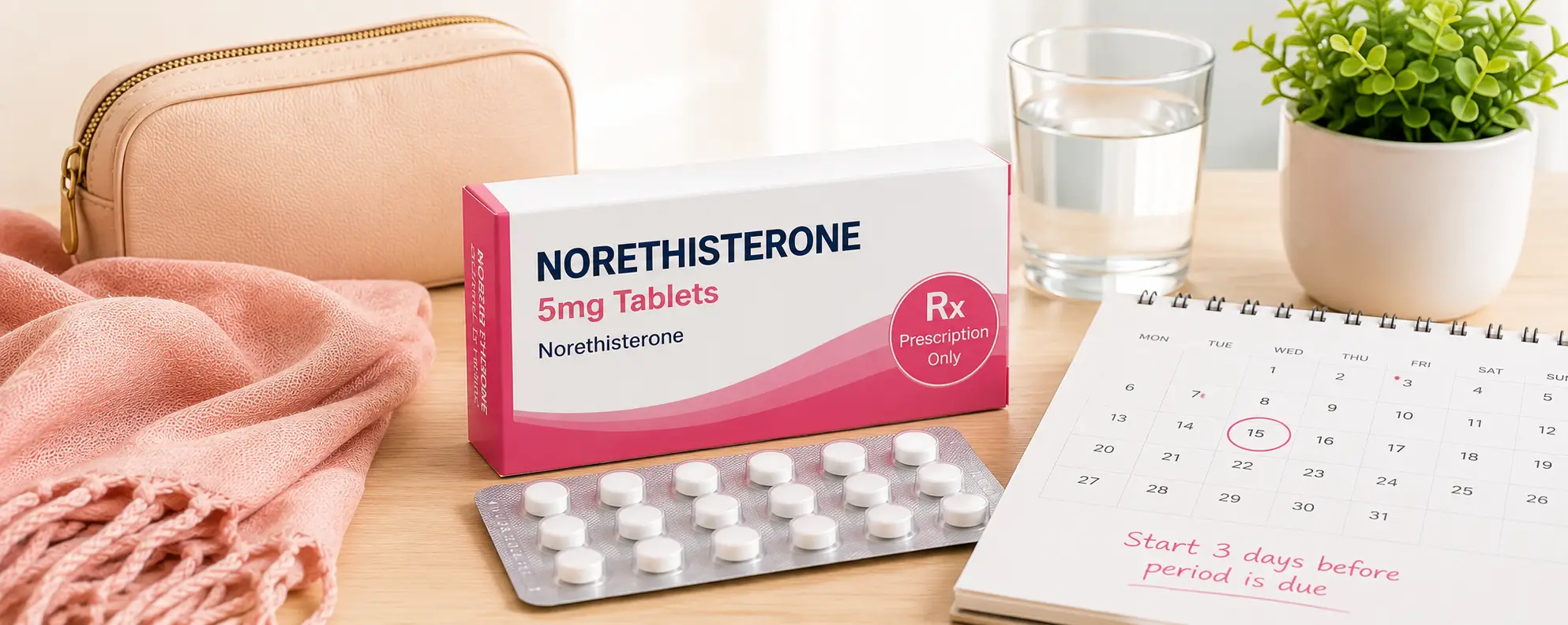
Norethisterone 5mg is a prescription-only progestogen medicine that can be used to postpone menstruation when it is clinically suitable. Before starting norethisterone 5mg treatment, a prescriber needs to review your medical history, current medicines, pregnancy possibility and relevant risk factors.
Most symptoms are not emergencies, but some serious warning signs require immediate action. Stop taking the tablets and seek urgent medical help if you develop symptoms of a blood clot or a severe allergic reaction. Prompt medical advice is also needed for jaundice, a migraine-type headache for the first time, significant visual symptoms or a marked rise in blood pressure.
This is Medicina Pharmacy's parent guide to period delay tablet side effects. Future symptom-specific articles should link back to this page and add a distinct, focused angle rather than repeat the same general safety information.
What are the common norethisterone side effects?
People often search for common norethisterone side effects, but the official patient leaflet does not give a frequency category for every listed symptom. It is therefore more accurate to describe them as possible side effects rather than assume that each one is common.
| Area | Possible effects | What to do |
|---|---|---|
| Bleeding and cycle changes | Spotting, bleeding between periods, unexpected or unusual bleeding, or a temporary absence of periods. | Continue as prescribed unless told otherwise. Seek advice if bleeding is heavy, persistent, painful or worrying. |
| Head and nervous system | Headache, dizziness, tiredness, sleep changes, low mood, nervousness, confusion or difficulty concentrating. | Seek advice if symptoms are severe, persistent, new or worsening. Some neurological symptoms need urgent help. |
| Stomach and bowel | Feeling sick, being sick, constipation, diarrhoea or dry mouth. | Speak to a pharmacist or prescriber if symptoms are troublesome or persistent. |
| Breasts | Breast pain or tenderness; a milky discharge when not pregnant or breastfeeding has also been reported. | Seek advice for severe or persistent symptoms, a new lump or an unusual discharge. |
| Fluid, appetite and weight | Bloating, fluid retention, swelling, changes in appetite or weight change. | Seek prompt advice for sudden, painful or one-sided swelling, or swelling with breathlessness. |
| Skin and hair | Acne, itching, rash, hives, hair loss or increased body or facial hair. | Emergency help is needed for facial or tongue swelling, wheezing, faintness or an intense itchy rash. |
| Serious warning signs | Symptoms of a blood clot, stroke, severe allergy, jaundice, a first migraine-type headache or significant visual symptoms. | Stop the tablets and obtain urgent medical assessment. |
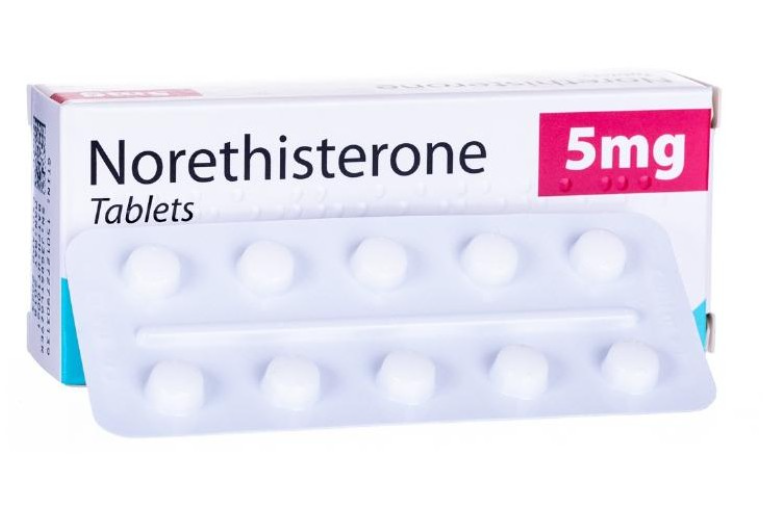 Images for illustrative purposes only
Norethisterone 5mg
Period Delay TabletsPrescription-only medicine
Choose the course that matches the period-delay duration discussed during your consultation.
Why can norethisterone cause side effects?
Norethisterone is a synthetic progestogen. Hormone-sensitive tissues in the womb, breasts, brain, skin and other parts of the body can respond to changes in progestogen activity, which helps explain why possible effects can involve bleeding patterns, breast symptoms, mood, fluid balance, the digestive system, skin and hair.
A symptom occurring while you take a medicine is not automatically caused by that medicine. The timing, severity, other health conditions and other medicines all matter, so speak to a pharmacist or prescriber if you are unsure.
Bleeding, spotting and menstrual changes
Spotting, bleeding between periods, unexpected or unusual vaginal bleeding, changes in bleeding pattern and a temporary absence of periods are listed possible effects of norethisterone.
Light spotting does not automatically mean that treatment is unsafe or that it has failed. Continue to follow your prescription label unless a clinician advises otherwise. Do not take extra tablets or change the dose to try to stop spotting.
Contact a pharmacist or the prescribing service if bleeding is heavy, persistent, painful, associated with dizziness or weakness, or different enough to concern you. Unexplained irregular vaginal bleeding also needs assessment before treatment because it can be a reason norethisterone is unsuitable.
Correct timing and dosing are important when norethisterone is used for period delay. Read the norethisterone dosage guide for the usual period-delay regimen, missed-dose advice and when bleeding normally returns after treatment.
Headaches, dizziness, tiredness and concentration changes
Possible nervous-system effects listed in the patient leaflet include headache, dizziness, tiredness, difficulty sleeping, low mood or depression, nervousness, sleepiness, confusion, difficulty concentrating and visual problems.
For a mild headache, dizziness or tiredness, rest, hydration and monitoring may be reasonable. Ask a pharmacist before taking another medicine for symptoms because over-the-counter products are not suitable for everyone and may interact with other medicines or conditions.
Seek prompt medical advice if a headache is severe, persistent, unusual for you or is a migraine-type headache occurring for the first time. Sudden severe headache with visual change, difficulty speaking, weakness, numbness, collapse or fainting can be a warning sign of a blood clot in the brain and needs urgent medical attention.
Mood changes, low mood and sleep symptoms
Depression, nervousness, sleep changes, confusion and concentration changes are listed possible effects. Hormonal medicines can affect mood differently from person to person.
Contact a healthcare professional if low mood, anxiety, agitation, confusion or sleep problems are severe, persistent or worsening. Seek urgent help if you have thoughts of harming yourself or feel that you cannot keep yourself safe.
Nausea and other digestive symptoms
Feeling sick, being sick, constipation, diarrhoea and dry mouth are listed possible digestive effects. These symptoms can also have many other causes, so do not assume that norethisterone is definitely responsible.
Continue to take the medicine exactly as prescribed. Do not repeat a dose after vomiting unless a pharmacist or prescriber specifically tells you to do so. Seek advice if vomiting is persistent, you cannot keep fluids down, or symptoms are severe or not settling.
Severe abdominal pain or yellowing of the skin or whites of the eyes needs prompt medical assessment because the leaflet also lists liver problems among important warning symptoms.
Bloating, fluid retention, swelling and weight changes
Norethisterone may be associated with bloating, fluid retention, swelling of the hands or ankles, changes in appetite and weight change. A short-term change on the scales may reflect fluid retention, but the cause cannot be determined from weight alone.
Do not use diuretics, laxatives or unregulated weight-loss products to manage bloating or weight change without professional advice. Contact a clinician if swelling is marked, sudden, painful, one-sided or accompanied by breathlessness.
Because progestogens can cause fluid retention, additional care may be needed in people with conditions that could be affected by fluid balance, including some heart, kidney, asthma, migraine or epilepsy-related circumstances. Declare these during the consultation.
Breast pain or tenderness
Breast pain and tenderness are listed possible effects. A milky discharge from the breast when not pregnant or breastfeeding has also been reported.
Seek medical advice if breast symptoms are severe, persistent or unusual, or if you notice a new lump, nipple changes or an unexpected discharge. Do not automatically assume that every breast symptom is caused by the medicine.
Skin, hair and allergic reactions
Possible skin and hair effects include acne, itching, rash, hives, hair loss or increased body or facial hair. Mild changes should be discussed with a pharmacist or prescriber if they persist or are troublesome.
Very rarely, norethisterone can cause a severe allergic reaction. Wheezing, difficulty breathing, feeling faint, swelling of the face or tongue, swelling of the hands or feet, or an intense itchy rash requires emergency medical help.
Serious warning signs: when to get urgent help
Stop taking norethisterone and seek urgent medical help if you develop symptoms that could indicate a severe allergic reaction or a blood clot.
| Warning area | Symptoms to recognise | Action |
|---|---|---|
| Possible blood clot in the lungs | Sudden severe sharp chest pain, coughing up blood, sudden shortness of breath or a rapid heartbeat. | Call 999 or seek emergency medical help. |
| Possible stroke | An unusually severe or prolonged headache, sudden visual change, difficulty speaking, collapse, fainting, weakness or numbness. | Call 999 or seek emergency medical help. |
| Possible deep-vein thrombosis | Severe pain, tenderness or swelling in the calf, ankle or foot, or a leg becoming red, warm or purple. | Stop the tablets and obtain urgent medical assessment. |
| Possible severe allergic reaction | Wheezing, breathing difficulty, faintness, swelling of the face or tongue, swelling of the hands or feet, or an intense itchy rash. | Get emergency medical help immediately. |
| Other prompt warning signs | Jaundice, a migraine-type headache for the first time, significant visual symptoms or a marked rise in blood pressure. | Seek prompt medical advice. |
Do not wait for a routine appointment if you have symptoms that could indicate a blood clot, stroke, severe allergy or serious liver problem.
Who may not be able to take norethisterone?
Norethisterone is not suitable for everyone. It must not be taken during pregnancy and may be unsuitable for people with certain medical histories, including previous idiopathic or current venous thromboembolism, active or recent arterial thromboembolic disease, liver dysfunction, undiagnosed irregular vaginal bleeding, porphyria or allergy to an ingredient in the tablets.
A prescriber also needs to know about migraines, epilepsy, asthma, heart or kidney problems, severe obesity, systemic lupus erythematosus, a personal or strong family history of blood clots, upcoming major surgery, prolonged immobility, recurrent miscarriage and use of anticoagulants.
The medical questionnaire is therefore an important safety step rather than an administrative formality. It helps identify contraindications, interactions and risk factors before a prescription decision is made.
Can other medicines affect norethisterone side effects or suitability?
Yes. Some prescription medicines, over-the-counter medicines and herbal products can alter norethisterone levels, affect its suitability or require closer assessment. A planned guide to norethisterone interactions will explain the main medicine groups in more detail.
Examples that must be declared include some medicines for epilepsy, certain antibiotics, some HIV medicines, anticancer medicines, ciclosporin, some medicines for high blood pressure, non-steroidal anti-inflammatory medicines and herbal products containing St John's wort.
Do not stop a regular medicine or start a new supplement without advice. List everything you take during the consultation, including medicines bought without a prescription and herbal products.
How to manage mild or non-urgent side effects safely
The right response depends on the symptom, how severe it is, how long it has lasted and your medical history. The following general steps can help you seek appropriate advice without changing treatment unsafely:
- Follow the dose and timing on your dispensing label. Do not reduce, increase or double the dose to manage symptoms.
- Keep a short note of when the symptom started, how severe it is and whether it changes after a dose.
- Stay hydrated and rest if you have mild headache, dizziness or tiredness, unless a clinician has advised fluid restriction.
- Ask a pharmacist before taking another medicine for a side effect, because over-the-counter products may not be suitable for everyone.
- Contact the prescribing service if a symptom is persistent, worsening, severe or affecting daily activities.
- Use urgent or emergency services for the serious warning signs described above.
Do not rely on another person's experience, social-media posts or reviews to decide whether a symptom is safe. The same symptom can have different causes and significance in different people.
Should you stop taking norethisterone if you get side effects?
Do not stop or change treatment solely because a mild symptom appears without first checking the patient leaflet or speaking to a pharmacist or prescriber. Stopping early may affect the timing of your bleed.
However, the patient leaflet advises stopping the tablets and obtaining urgent help for symptoms of a severe allergic reaction or possible blood clot. Prompt medical advice is also needed for jaundice or a migraine-type headache occurring for the first time.
When in doubt, contact the prescribing service and describe the symptom clearly. Do not take an extra dose to compensate for a missed or stopped dose.
How long do norethisterone side effects last?
There is no single duration that applies to every side effect. Mild symptoms may settle during treatment or after the medicine is stopped, while other symptoms may persist or have another cause. The duration depends on the symptom, the person and the reason for treatment.
Do not simply wait if symptoms are severe, worsening or concerning. Seek medical advice so that the symptom can be assessed in context.
Side effects after stopping norethisterone
After the final prescribed dose, menstruation usually returns within about three days, although the exact timing varies. The first bleed may not look or feel exactly like your usual period.
A symptom that started during treatment may not disappear immediately after the last tablet. Seek advice if symptoms persist, worsen or are concerning rather than assuming that they are a normal withdrawal effect.
For more information about treatment timing and the return of bleeding, read how long norethisterone takes to work.
If your period does not return after the course and pregnancy is possible, take a pregnancy test and speak to a healthcare professional before considering another course.
Are period delay tablets safe?
No prescription medicine is safe or suitable for everyone. Norethisterone is licensed in the UK for postponement of menstruation, but suitability depends on individual health, current medicines, pregnancy possibility and blood-clot risk.
When people search for safe period delay tablets, the more useful question is whether a regulated prescriber has assessed the medicine as appropriate for that individual and proposed course.
The best period delay tablets are the options that fit a person's health and circumstances after appropriate assessment. Norethisterone may be suitable for many people, while another approach may be more appropriate for others.
Experiences described in norethisterone reviews can help readers understand what other people have noticed, but reviews cannot predict effectiveness, side effects or medical suitability for an individual.
How the online consultation checks safety before treatment
A medical consultation is required before norethisterone can be prescribed. The questions help assess your expected period date, proposed treatment duration, pregnancy possibility, medical history, blood-clot risk, migraines, liver health, current medicines and other relevant factors.
Answer every question accurately, including information that may seem unrelated. Omitting a medicine, health condition, recent surgery or family history can affect the safety assessment.
You can review the Norethisterone 5mg treatment page and complete the online assessment. A prescriber then decides whether treatment can be supplied. Completing the questionnaire or selecting a pack does not guarantee that a prescription will be issued.
The planned guide can you buy norethisterone over the counter in the UK will explain why a prescription and clinical assessment are required and how a regulated online-pharmacy route works.
Reporting a suspected side effect
Tell your doctor, pharmacist or nurse about any suspected side effect, including a symptom that is not listed in the patient leaflet. Suspected adverse reactions can also be reported through the MHRA Yellow Card Scheme.
Reporting does not prove that a medicine caused the symptom, but it helps regulators monitor medicine safety and identify possible patterns. The Yellow Card service does not provide personal medical advice, so contact a healthcare professional or NHS 111 if you are worried about your health.
Conclusion
Possible norethisterone side effects include changes in bleeding or spotting, headache, dizziness, tiredness, nausea, breast tenderness, bloating or fluid retention, mood changes and skin or hair changes. Not everyone experiences side effects, and individual responses vary.
Seek urgent medical help for symptoms of a blood clot, stroke or severe allergic reaction. Prompt medical advice is also needed for jaundice, a migraine-type headache occurring for the first time, significant visual symptoms or a concerning rise in blood pressure.
Norethisterone is prescription-only and is not suitable for everyone. A clinical consultation is needed to assess your health, medicines and treatment dates before a prescriber decides whether treatment may be appropriate.
FAQs
What are the common side effects of norethisterone?
Possible effects include changes in bleeding or spotting, headache, dizziness, tiredness, nausea, breast tenderness, bloating or fluid retention, mood or sleep changes, and skin or hair changes. The official leaflet does not provide a frequency category for every listed effect, and not everyone experiences side effects.
Can norethisterone cause spotting or bleeding?
Yes. Spotting, bleeding between periods, unexpected or unusual bleeding and changes in bleeding pattern can occur. Do not change the dose or take extra tablets. Contact a pharmacist or prescriber if bleeding is heavy, persistent, painful or worrying.
Can norethisterone cause headaches?
Yes. Headache is a listed possible side effect. Seek prompt advice for a severe, persistent or unusual headache, especially a migraine-type headache occurring for the first time. Sudden severe headache with visual, speech, weakness or numbness symptoms needs urgent medical help.
Can norethisterone cause nausea or bloating?
Yes. Feeling sick, being sick, bloating and fluid retention are listed possible effects. Speak to a pharmacist or prescriber if symptoms are troublesome or persistent. Seek prompt help for severe abdominal pain, persistent vomiting, marked swelling or breathlessness.
Can norethisterone cause weight gain?
Weight change, appetite change and fluid retention are listed possible effects. A short-term increase on the scales may reflect fluid retention, but the cause cannot be determined from weight alone. Seek advice if the change is marked, persistent or accompanied by significant swelling.
Can norethisterone affect your mood?
Depression, nervousness, sleep changes, confusion and concentration changes are listed possible effects. Contact a healthcare professional if symptoms are severe, persistent or worsening. Seek urgent help if you have thoughts of harming yourself.
What serious warning signs need urgent medical help?
Stop the tablets and seek urgent help for sudden chest pain, shortness of breath, coughing blood, a painful or swollen leg, sudden severe headache, visual or speech changes, weakness or numbness, collapse, or symptoms of a severe allergic reaction such as wheezing or facial or tongue swelling.
Is norethisterone safe for period delay?
Norethisterone is licensed in the UK to postpone menstruation, but it is not suitable for everyone. A prescriber must assess pregnancy possibility, blood-clot risk, liver health, unexplained bleeding, medical history and current medicines before deciding whether treatment may be appropriate.
Should I stop taking norethisterone if I get side effects?
Do not change or stop treatment for a mild symptom without checking the patient leaflet or speaking to a pharmacist or prescriber. However, stop the tablets and seek urgent help for possible blood-clot symptoms or a severe allergic reaction. Prompt advice is also needed for jaundice or a first migraine-type headache.
Can side effects continue after stopping norethisterone?
A symptom that began during treatment may not disappear immediately after the final dose. Your period usually returns within about three days, although timing varies. Seek medical advice if symptoms persist, worsen or are concerning.
Disclaimer
This page provides general information and is not a substitute for personal medical advice. Norethisterone is a prescription-only medicine and is not suitable for everyone. Always follow the instructions supplied by your prescriber, read the patient information leaflet provided with your medicine and seek urgent help for serious warning symptoms.