


When deciding between Provera or Norethisterone for period delay, know that both are proven options to postpone your period temporarily.
The confusion starts when choosing between them, since their main ingredients and mechanisms appear similar at first glance. Yet, subtle distinctions set them apart.
Therefore, in today's discussion, we will clarify the meticulous difference between Provera and Norethisterone.
In the UK, it is very common for women to prefer to delay their menstrual cycle for a short time due to several important life events. It could be a holiday, an exam, a wedding, or even a religious occasion.
Depending on the individual's physical condition and medical history, the doctor may prescribe any of the period-delay tablets with detailed instructions.
So let’s dive in deep to find out which one, either Norethisterone or Provera, is better for you.
What Is Norethisterone?
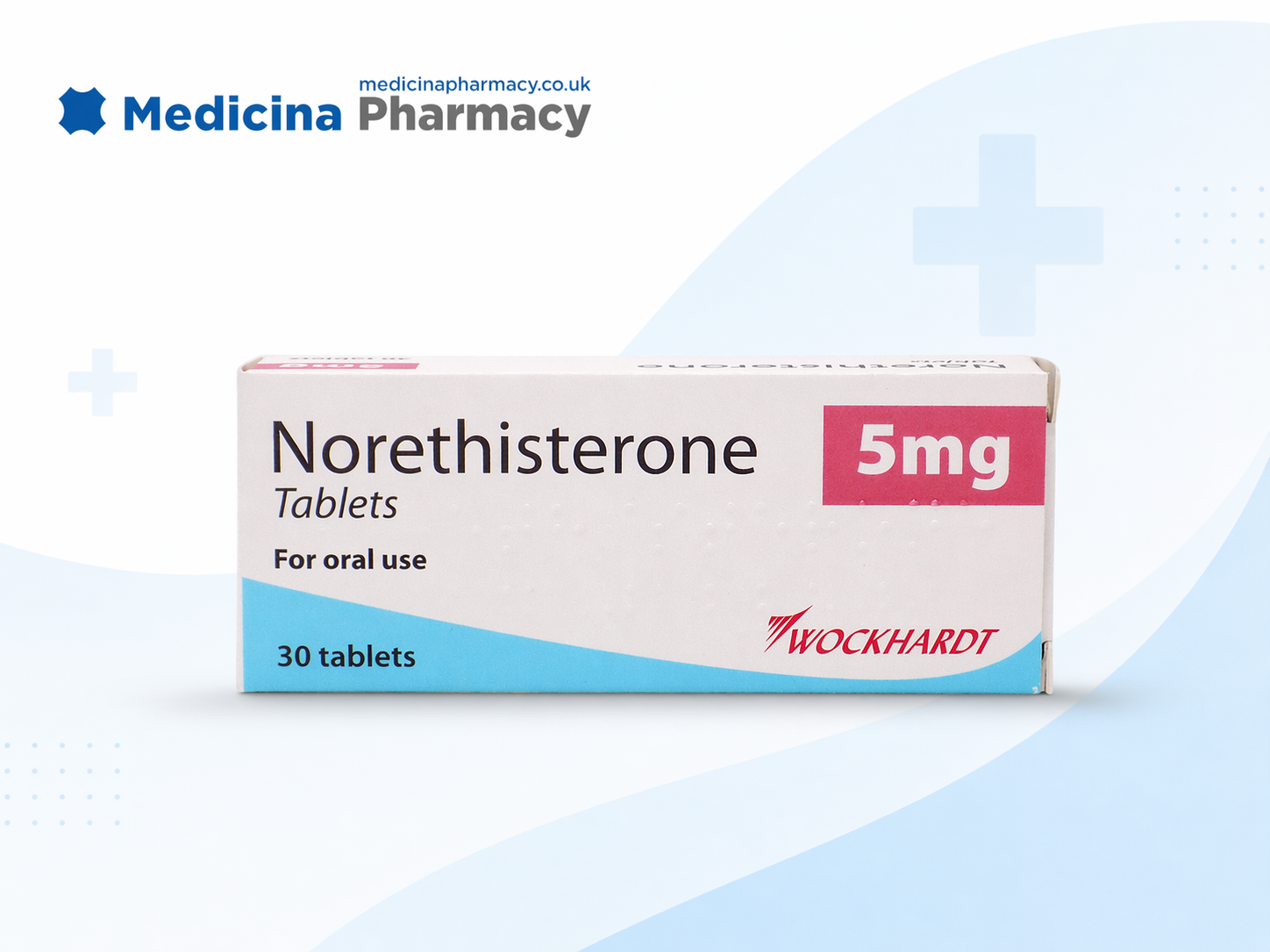
Norethisterone is a synthetic form of progesterone. In the UK, generally, doctors prescribe Norethisterone 5 mg tablets to women for period delay.
However, the pill also has multiple hormonal uses. It is widely used to treat any abnormal tissue grown in the womb.
To get a clearer idea about the pill, you should know about progesterone. Progesterone is mainly a natural hormone that plays a key role in regulating periods.
In the upcoming sections, you will get a more detailed idea about how a menstrual cycle works. You will also know briefly the role of progesterone and how Norethisterone or any period delay tablet works.
What Is Provera?
Choose Your Treatment
Select the period delay option that best suits your needs.
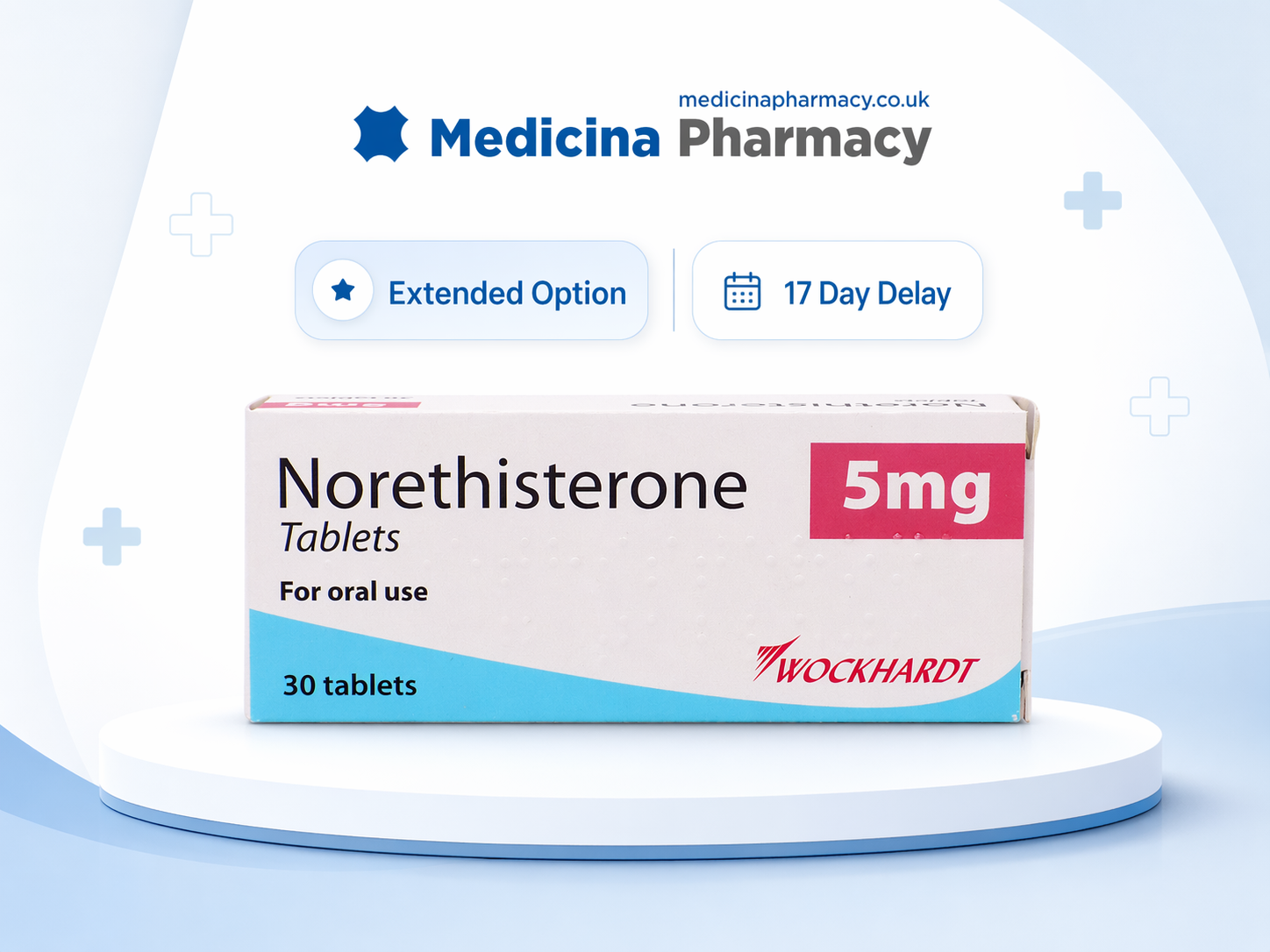
Like Norethisterone, Provera is also a synthetic version of the hormone progesterone. Provera has multiple uses; especially its 10 mg tablet is recommended for period delay.
Besides this, it is widely used in treating hormonal replacement therapy, reducing menopause symptoms, and restoring normal menstrual cycles.
Provera or Norethisterone: The Main Difference
Provera or Norethisterone, one thing is common – both these drugs are effective for period delay for a short time. Even their core components are the same (synthetic form of progesterone).
So what are the differences between Norethisterone and Provea?
Our topic today is not to discuss the other uses of these two tablets besides period delay. Still, we need to cover it to know the difference between these hormonal drugs.
Norethisterone is very effective in treating endometriosis (a disease that generates abnormal tissues in the womb lining). This pill also works to fix heavy, painful, and irregular periods.
Anyways, let’s clarify another misconception. Norethisterone is not a birth control pill.
Norethisterone was invented in 1951 and initially considered a contraceptive pill. Comparatively, it performs better than other contraceptive methods such as condoms, diaphragms, or caps.
But it cannot consistently prevent ovulation, because it can only prevent it for a short time. Therefore, it cannot be considered a birth control pill.
On the other hand, Provera is also an artificial version of progesterone, also known as medroxyprogesterone. It is widely used in treating abnormal bleeding from the womb, fixing irregular menstrual cycles, hormonal replacement therapy with oestrogen, and, in some cases, cancer in the uterus.
When it comes to period delays, doctors generally prescribe Norethisterone 5 mg to women with overall normal health conditions.
Norethisterone may not be suitable for some women, particularly for those aged over 35 or who smoke, as its effectiveness can be reduced and risks may be increased.
There are almost no cases that show that Norethisterone causes overweight. But it might be harmful to the individuals who are already overweight.
Northisterone could be more harmful to patients who have liver disease and blood clots. In all these aspects, the doctor prescribed Provera or other period-delay pills as an alternative to Norethisterone.
However, both these tablets are prescription-only drugs. Consult a doctor and briefly discuss your body condition and previous health history.
Reviewing all your health conditions, the doctor may either prescribe Norethisterone or Provera. In some cases, you might not be suitable for any kind of period-delay tablets.
That’s why a doctor consultation is essential before choosing a pill for period control.
Quick Comparison Table Between Norethisterone and Provea
| Feature | Norethisterone | Provera |
|---|---|---|
| What it is | A synthetic form of progesterone (progestogen) | A synthetic form of progesterone called medroxyprogesterone |
| Common use in period-delay discussions | Often discussed for a short-term period delay | Sometimes discussed as an alternative to menstrual timing |
| When people may be told to start it | Usually taken a few days before your period is due (as advised by a prescriber) | Timing may vary depending on the situation and medical advice |
| When to stop taking the tablets | Typically stopped after the planned delay period (follow prescriber instructions) | Stopped based on clinician guidance, depending on use |
| Possible side effects | May include headaches, nausea, breast tenderness, or mood changes | May include similar hormonal side effects, though experiences vary |
| Suitability considerations | Not suitable for everyone (e.g. some people with clot risk, liver conditions, or certain health factors) | May be considered when norethisterone is not suitable, depending on medical history |
| General clot-risk discussion | May not be suitable for people with a history of blood clots or certain risk factors | Risk considerations vary and should be assessed individually by a clinician |
| Other medical uses | May be used for heavy, painful, or irregular periods | May be used for abnormal bleeding, hormone therapy, or cycle regulation |
| When medical advice is needed | Always before starting, especially if you have existing health conditions or take other medicines | Always required, as it is a prescription-only medicine |
How Do These Tablets Work to Delay Periods?
Before you know how Norethisterone, Provera or any period delay tablet works, you need a clear idea about how a menstrual cycle works.
The most important thing to know is what the role of progesterone is in a menstrual cycle.
So let’s first start with progesterone:
Progesterone is a hormone naturally produced in the body. It plays a pivotal role in regulating a normal menstrual cycle.
By keeping its level high, its core duty is to prevent the womb lining from shedding.
Now let's see how the menstrual cycle works:
Women have periods in general once in a cycle of 28 days on average. In the first phase of the period, the hormone progesterone naturally drops. It signals the womb lining from shedding, and that's called a period.
Typically, it stays 3 to 7 days.
After that, the body prepares for a possible pregnancy. In the middle of the cycle, ovulation occurs (around 14 days).
Before ovulation, the progesterone level remains low. After ovulation, progesterone levels start rising and prepare to prevent the womb lining from shedding.
If pregnancy does not happen, the progesterone level drops again 12 to 14 days later. This drop causes the next menstrual cycle.
Now, you can easily understand how a period delay pill works.
Norethisterone, Provera, or whatever the pill type is – its main duty is to artificially keep the progesterone level high. By keeping it high, you can protect your womb lining from shedding until you stop the pill.
However, period delay tablets work effectively by taking the right dose at the right time. (In the next section, we will briefly discuss its timing).
Another thing to remember – these tablets are not recommended for long-term use.
In most cases, you can take it for a maximum of 14 to 17 days based on the doctor's guidance.
When Do You Start Taking Provera or Norethisterone?
Take the first Norethisterone pill a minimum of 72 hours before the expected period. Then take it three times a day and maintain the same time for the best result.
You should not take it for more than 20 days. You will notice spotting within 2 to 3 days after stopping the pill.
On the other hand, the Provera timing is almost the same – a minimum of three days before the expected menstrual cycle. You have to take 1 tablet three times a day.
You can take this pill to delay your period by more than 30 days.
However, do not take either Provera or norethisterone for a longer time. The safe advice is not to take it more than once every 90 days.
Side Effects: What Readers Should Know
Like all medicines, both Norethisterone and Provera have some side effects. Most side effects are mild and disappear over time.
The interesting point is that some effects are common to both Norethisterone and Provera, such as breast tenderness, nausea, headaches, etc. However, in rare cases, Norethisterone could cause an allergic reaction.
If you notice any severe issues, either from Norethisterone or Provera, seek immediate medical attention.
FAQ:
Now, let's explain the most common queries related to Provera and Norethisterone for period delay.
Does Provera or Norethisterone Affect Clot Risk?
Yes, both Provera and Norethisterone can increase the chance of blood clots. Particularly if you take high doses.
Norethisterone is considered slightly higher risk for people who already have blood clots.
Can You Take Provera and Norethisterone Together?
No. Both of these pills contain a mimicked version of progesterone. If you take Provera and Norethisterone together, it could severely make hormonal imbalances in your body.
Provera or Norethisterone: Which May Be Better for You?
In general, a doctor may prescribe Norethisterone 5 mg depending on your medical history. In some cases, Norethisterone may not be suitable for you.
In this situation, you might be prescribed Provera 10 mg as an alternative to Norethisterone.
Overall, the options vary from individual to individual depending on their body condition and medical history.
Important Safety Points Before Taking Tablets to Delay a Period
Whether it's Norethisterone or Provera, you should not decide it on your own without a doctor's consultation. The doctor will suggest the suitable one after reviewing your age, weight, and overall health history.
What If You Already Take the Combined Contraceptive Pill?
If you are taking a contraceptive pill, you do not need additional period delay tablets such as Provera or Norethisterone. Because the contraceptive pill already controls your menstrual bleeding.
What If You Take Phasic Pills?
Phasic pills are usually prescribed for effective contraception. However, if you are taking the Pahisc pill, it becomes too complex to decide whether you should take any period delay tablet.
Consult a doctor, your GP practitioner or an experienced pharmacist.
What Happens After You Stop Taking the Tablets?
After stopping the period dayl tablets, your period will start within 2 to 3 days. In some cases, it takes a bit of time (7 days approximately).
When to Speak to a Doctor or Pharmacist
Period delay tablets are usually a prescription-only medicine. The best practice is to consult a doctor both before and after taking any period-delaying pill. Before, it is essential to make sure it is suitable for you.
The doctor may approve your preferred period deal daily pill if everything is appropriate, or may provide an alternative. In some cases, a doctor may advise you to avoid any period delay pill depending on your health condition.
You should also consult your doctor after taking this pill. Inform me how you feel or if you have noticed any abnormality.
Final Thoughts: Provera or Norethisterone?
At the end of the discussion, we come to a point – Provera or Norethisterone; you cannot pick one depending on a single aspect.
Listen to your body; consider your current health condition, age and lifestyle. You have to inform everything to a doctor of everything and take a consultation. After reviewing everything, your doctor will decide which tablet will be suitable for you for a period of delay.